
You Never Used to Snore. Now He’s Recording You at 3 a.m. Here’s What Changed in Your Throat After 40 — and the Quiet Fix That Doesn’t Go on Your Face
Snoring is far more common in women after their mid-40s, and nobody warns you. It isn’t a character flaw and it isn’t “unfeminine.” It’s a drier, softer throat. Here’s why it happens and what you can do about it tonight, without a chin strap or a mouthguard.

The first time he mentioned it, you laughed. You don’t snore. You’ve never snored. He’s the one who snores.
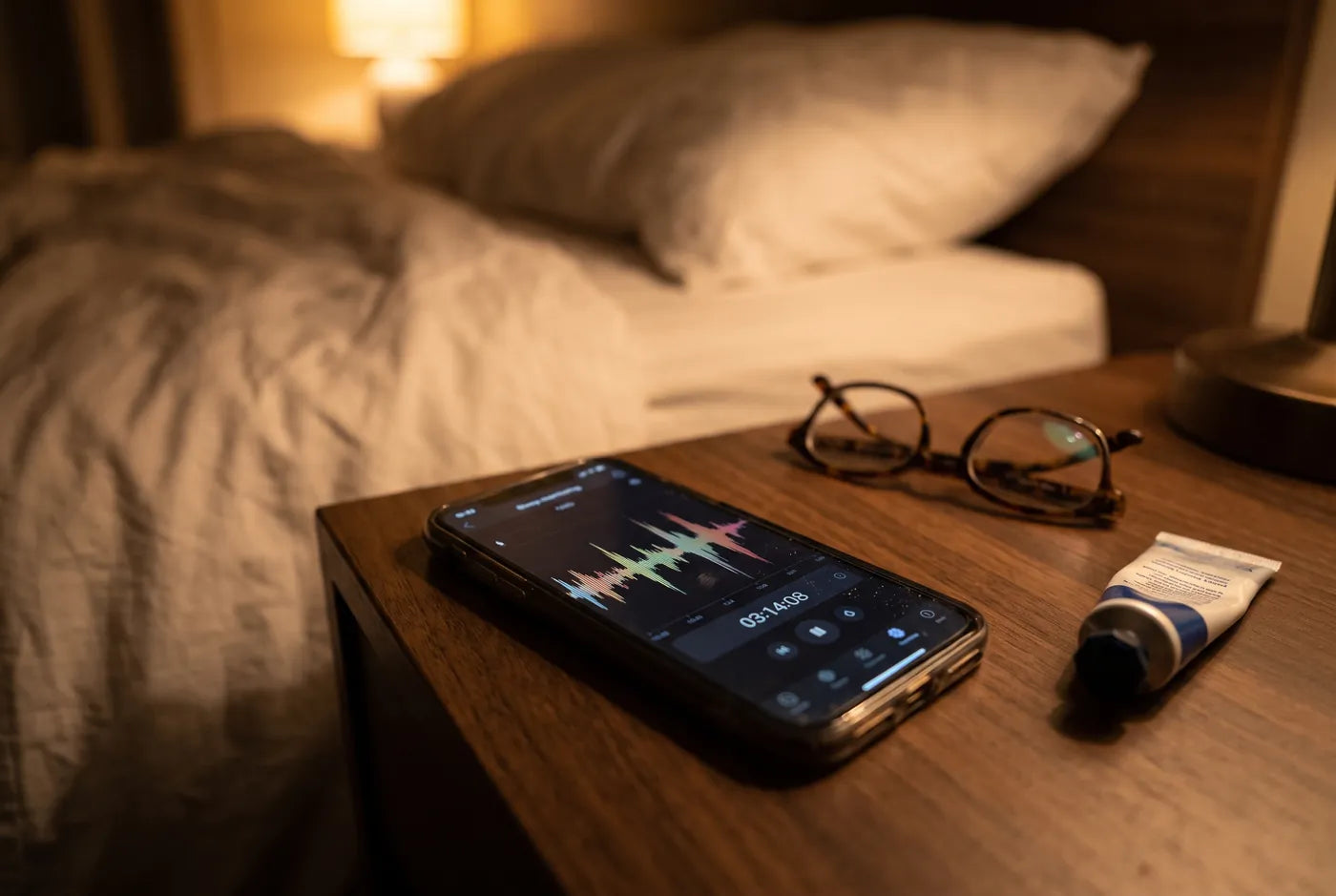
Then one morning he held up his phone and played it for you. A low, ragged rattle, coming from your side of the bed.
You didn’t know what to say. You felt your face go hot. It was embarrassing in a way that’s hard to explain to anyone who hasn’t been there.
Since then, maybe you’ve started lying awake on purpose, waiting for him to fall asleep first. Maybe you’ve stopped wanting to share a hotel room with friends. Maybe he’s already spent a night or two in the guest room, and he says it’s fine, and you know it isn’t.
Here’s what nobody tells women about this.
It isn’t random, it isn’t your fault, and it’s one of the most common changes there is for women in their 40s and 50s. It just doesn’t get talked about, because almost everything written about snoring was written about men.
Does Any of This Sound Familiar?
Women who start snoring later in life tend to notice the same things.
- It started in the last few years, around the time your sleep changed in other ways too: hot nights, waking at 3 a.m., lighter sleep.
- You wake up with a dry, scratchy throat and reach for the water glass before you open your eyes.
- It’s worse after a glass of wine, a late dinner or a stuffy week.
- Someone has played you a recording, and you didn’t recognize the sound.
- You’ve started trying to fall asleep last, or you worry about sharing a room when you travel.
If two or more of those hit home, keep reading. What’s happening is simple, and once you understand it, the answer gets simple too.
What Actually Changes in Your Throat After 40
Snoring is the sound of air squeezing past soft tissue at the back of the mouth and throat. When that tissue is dry, puffy or relaxed, the airway gets narrower, the air speeds up, and the tissue flutters. That flutter is the sound.
For years, your body kept that tissue firm and moist without you ever thinking about it. In your 40s and 50s, as estrogen and progesterone shift, that changes in a few quiet ways.
The same hormone shift that dries skin and eyes can dry the mouth and throat too. A dry lining is stickier and vibrates more easily.
The muscles that hold the airway open tend to loosen more during sleep, so the soft tissue sits closer together.
A drier, softer, narrower throat is exactly what makes the rattle. Add a glass of wine, a stuffy nose or a warm bedroom and it gets louder.
- That’s why it seemed to start out of nowhere: nothing about your habits changed, your throat did.
- That’s why you wake up so dry: hours of air rushing over a lining that’s already low on moisture.
- That’s why nasal strips do so little: your nose isn’t where the sound starts.
It can happen in pregnancy too, when swelling and congestion are common. Different reason, same narrow, puffy throat.
Why “Just Snoring” Doesn’t Feel Like “Just” Anything
If you’ve brought it up with anyone, you may have been told it’s “just snoring” and nothing to worry about. Medically, that may be true. It doesn’t make it feel any smaller.
Because it doesn’t stay in the bedroom. It’s the girls’ weekend where you ask for your own room. The flight where you’re afraid to doze off. The new relationship where you lie awake so he falls asleep first. The husband who quietly takes his pillow to the guest room and says he “just couldn’t get comfortable.”
So you start managing it. You fight sleep. You sleep lighter. You wake up more tired, which makes everything else about this stage of life harder.
None of that is a willpower problem. It’s a dry, soft throat.
The Fixes That Were Made for Someone Else
Look at what’s sold for snoring and you’ll notice it was designed for a man who doesn’t care what he looks like in bed.

Every one of these works on the outside of your face. What changed is on the inside of your throat.
What a Dry, Soft Throat Actually Needs
Once you see it this way, the answer is less about blocking the sound and more about caring for the tissue that makes it. A throat that stays moist and calm through the night has less to rattle.
That means something that reaches the back of the throat, right before sleep. Not something you strap on. Not something you sleep around. Something you’d be happy to keep on your nightstand next to your hand cream.
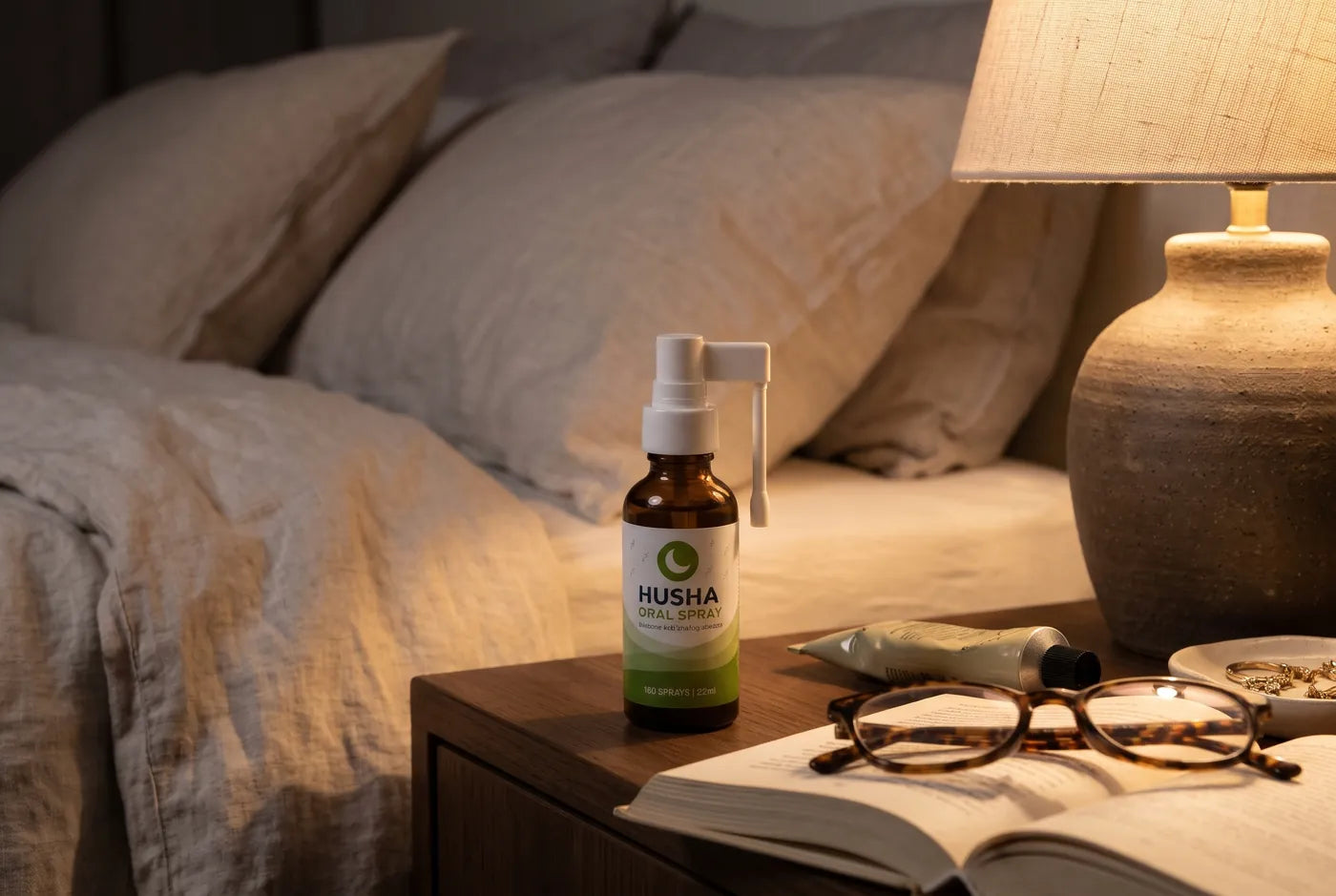
That’s the idea behind HUSHA: a few quick sprays to the back of the throat at bedtime, to soothe and moisten the place where snoring starts.

Made for the Throat, Not the Nose
HUSHA works in two layers: one you feel the moment you spray, and one that keeps working while you sleep.
Finally, Something for Snoring You’d Actually Use
It’s called HUSHA Anti-Snoring Spray: a natural oral spray that soothes and moistens the mouth and throat to help you snore less.
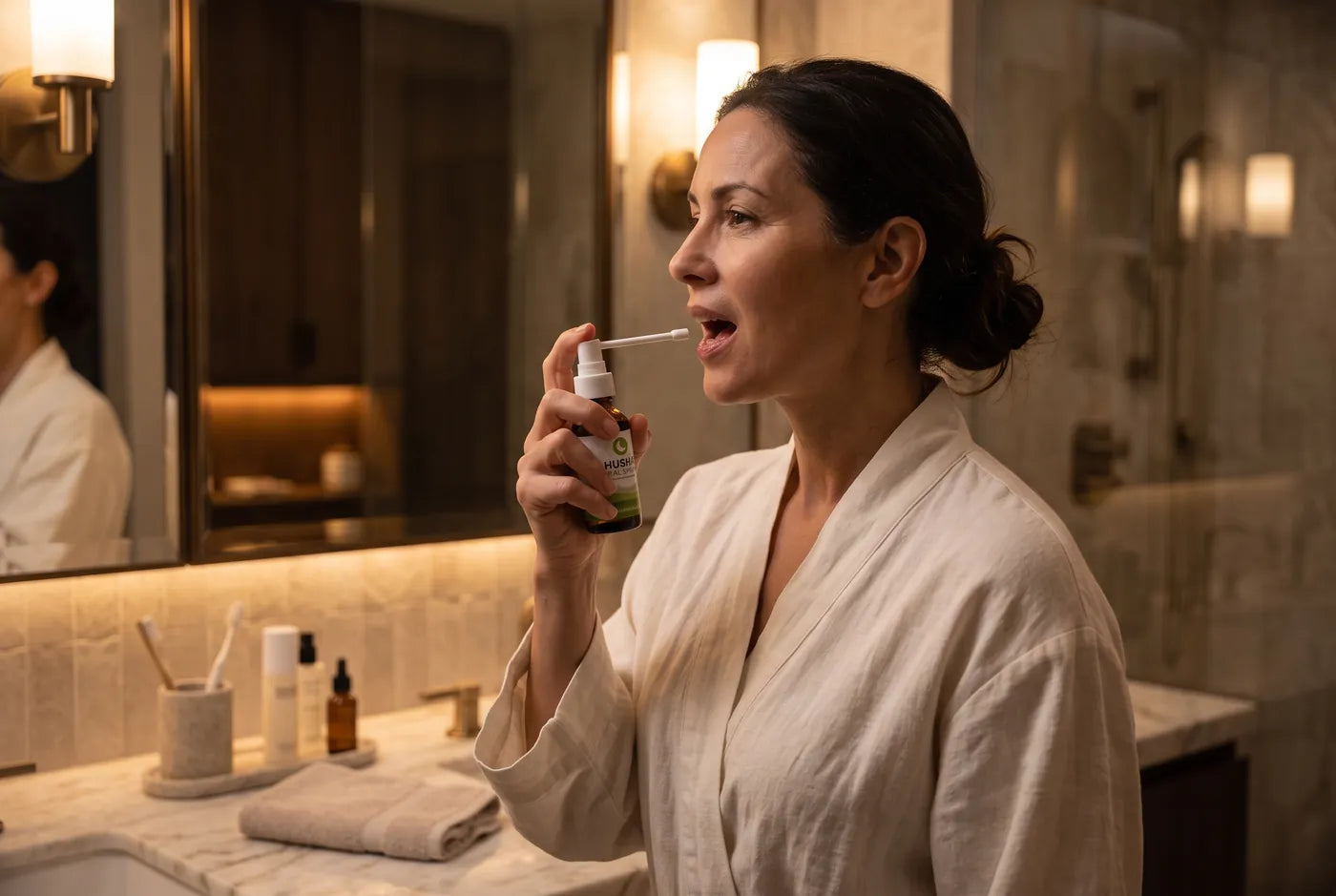
No strap. No mouthguard to clean. No tape on your lips. It takes about ten seconds after you brush your teeth, and then you go to sleep however you like.
- 30-day money-back guarantee. No need to send the bottle back
- Device-free, nothing on your face
- Tracked delivery to the US, Canada, the UK, Australia and New Zealand
Cancel anytime
Give It 7 Nights
We’re not going to promise you silence. Nobody honest can. What HUSHA is made for is quieter nights: the kind where he stops nudging you, stops reaching for his phone to record, and stays in the bed.
Night 1. Brush your teeth, shake the bottle and give the back of your throat a few quick sprays. Skip food and drinks for 30 minutes. Then sleep in whatever position you like. Some women notice a softer night right away.
Nights 2 to 6. Keep going every night. The overnight layer works with your throat over several nights, so consistency matters more than any single night.
Night 7. Now ask him. Not “did I snore?” but “how did you sleep this week?” That’s the real test.
Day 30. If you’re not sleeping better, email us for a full refund. You keep the bottle.
What Waiting Costs You
- Another night lying awake on purpose so he falls asleep first.
- Another trip where you book your own room “just in case.”
- Another morning with a desert-dry throat.
- A guest room that slowly stops feeling temporary.
Now picture the other version. You fall asleep when you’re tired, not when it’s safe. He’s still there in the morning. Nobody plays you anything at breakfast.


You’re Not Hoping It Works. You’re Trying It With Nothing to Lose.
If you’re hesitating, it’s probably because snoring products feel like they were made for someone else. This one wasn’t. It’s a small bottle, a mint taste and ten seconds at bedtime.
And you don’t have to take anyone’s word for it. Give it 7 nights. You have 30 days. If you’re not sleeping better, you get your money back.
30-Day Money-Back Guarantee
If you’re not sleeping better, contact us within 30 days for a full refund. You don’t need to send the bottle back. Just email support@tryshopcircuit.com.

P.S. Snoring that starts in your 40s isn’t a personal failing. It’s a drier, softer throat, and that’s exactly the part HUSHA is made for. Nothing on your face, nothing in your mouth all night.
P.P.S. Give it the full 7 nights before you judge it, then ask him how he slept. You still have 30 days to decide.